What Is Limescale?
That white, crusty buildup on your taps? It’s limescale — and it’s doing far more damage than you can see.
What Is Limescale?
Limescale is the hard, chalky deposit left behind when hard water is heated or evaporates. It’s made up of calcium carbonate — the same minerals dissolved in your water supply. When water temperature rises above 61°C, or when standing water evaporates, these minerals come out of solution and solidify into a white-grey crust. You’ll recognise it instantly: the white ring around your taps, the flaky buildup in your kettle, the cloudy residue on your shower door. But the limescale you can see is only a fraction of the problem. The most damaging deposits form in places you can’t reach — inside your boiler, around heating elements, and throughout your home’s pipework.
Where Limescale Builds Up
Limescale doesn’t discriminate. Anywhere water flows, heats, or sits in your home, limescale is forming. Here’s where it shows up — and where it hides. Visible limescale: around taps and spouts, on showerheads and shower screens, across bathroom tiles and grout lines, inside kettles and coffee machines, on toilet bowl waterlines, and anywhere water regularly evaporates. Hidden limescale: inside your boiler’s heat exchanger, on the heating elements of your washing machine and dishwasher, throughout your home’s hot water pipework, inside your hot water cylinder, and on the internal components of any appliance that heats water. An average 4-person UK household in a hard water area generates up to 70kg of limescale per year. That’s the equivalent of a full suitcase of chalk running through your plumbing system annually. Year after year, it accumulates — narrowing pipes, insulating heating elements, and slowly degrading everything it touches.
What Limescale Is Really Costing You
Limescale is an insulator. When it coats the heating element inside your boiler, it creates a barrier between the element and the water it’s trying to heat. Your boiler compensates by running longer and working harder — burning more gas or electricity to achieve the same temperature. Just 1mm of limescale buildup can increase energy consumption by up to 7%. In a typical UK household, that translates to £150–200 per year in wasted energy alone. Then there’s the appliance damage. Limescale shortens the lifespan of boilers, washing machines, dishwashers, and kettles by up to 30%. A boiler that should last 15 years might fail in 10. A washing machine that should give you 12 years of service might break down in 8. These aren’t minor costs — boiler replacements run into thousands of pounds, and most people write it off as normal wear and tear without ever connecting it to their water. Add in the extra cleaning products, the limescale removers, the descaling tablets, the time spent scrubbing bathroom surfaces every week, and the occasional emergency plumber visit — and the total annual cost of limescale in a hard water home easily exceeds £500. Over a decade, that’s £5,000 or more. Gone. On a problem that has a permanent solution.
What Is a Water Softener?
Why Temporary Fixes Don’t Work
Most people deal with limescale reactively. Vinegar on the showerhead. Descaler in the kettle. A specialist spray for the taps. White vinegar soaks for the coffee machine. These treatments remove what you can see on the surface, and they do help in the short term. But they don’t touch the limescale forming inside your pipes, your boiler, or your appliances right now. They don’t stop new deposits from forming the moment the water runs again. And they cost time and money every single week, month after month, year after year. You’re treating the symptom while the cause continues unchecked. Magnetic descalers and electronic water conditioners claim to alter the behaviour of minerals without removing them. The evidence for their effectiveness is limited, and they don’t produce genuinely soft water — which means you won’t see the full range of benefits for your skin, hair, or cleaning. The only way to permanently stop limescale is to remove the minerals that create it — before they reach your taps. That’s what a water softener does. And it’s the only approach that addresses the problem at its source.
How Notric Eliminates Limescale — Permanently
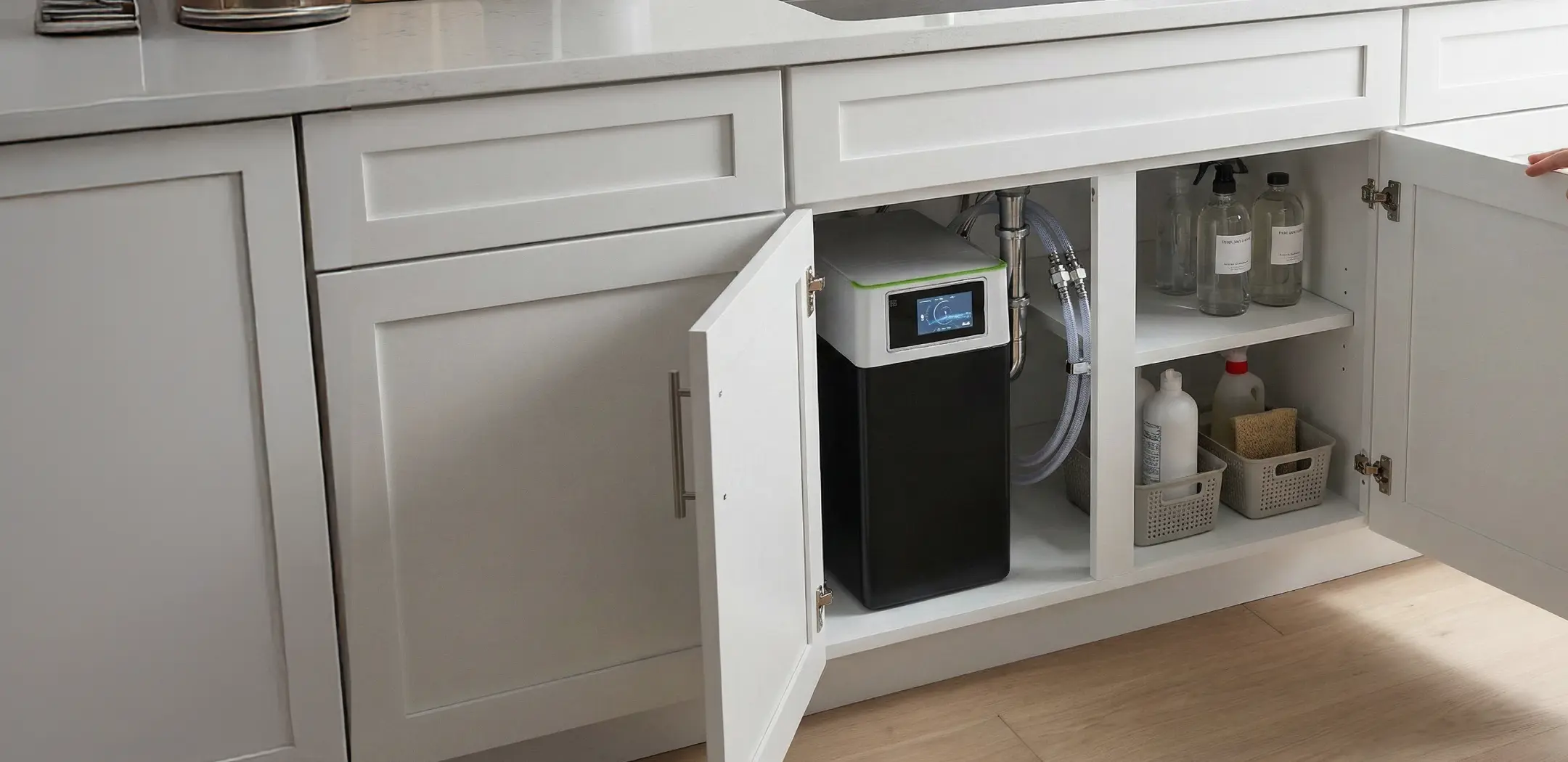
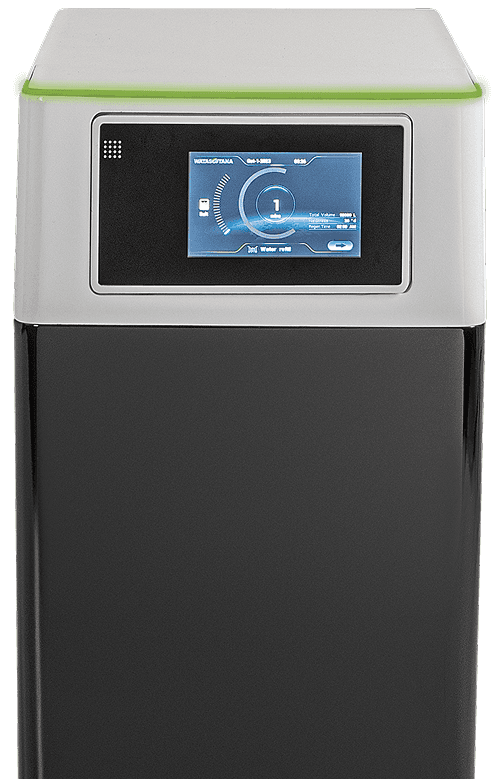
The Notric water softener connects to your mains water supply and uses ion exchange technology to remove the calcium and magnesium that cause limescale. Every drop of water that enters your home passes through the system first — so every tap, every shower, every appliance receives soft water. No new limescale forms. Existing limescale in your pipes and appliances gradually dissolves as soft water flows through the system. Taps stay clean. Showerheads stay clear. Your boiler runs efficiently. And the scrubbing stops. The Notric system is ultra-compact — designed to fit under your kitchen sink where most traditional softeners can’t. It features a full-colour touchscreen for easy monitoring, laser salt detection that alerts you when it’s time to top up, a 48-hour backup battery for uninterrupted operation during power cuts, and automatic regeneration that handles itself without any input from you. It’s installed by a certified local dealer in around two hours, and it’s backed by a 12-year warranty. Stop cleaning up after limescale. Stop paying for the damage it causes. Stop it at the source.
Frequently Asked Questions
Find a Notric Dealer Near You
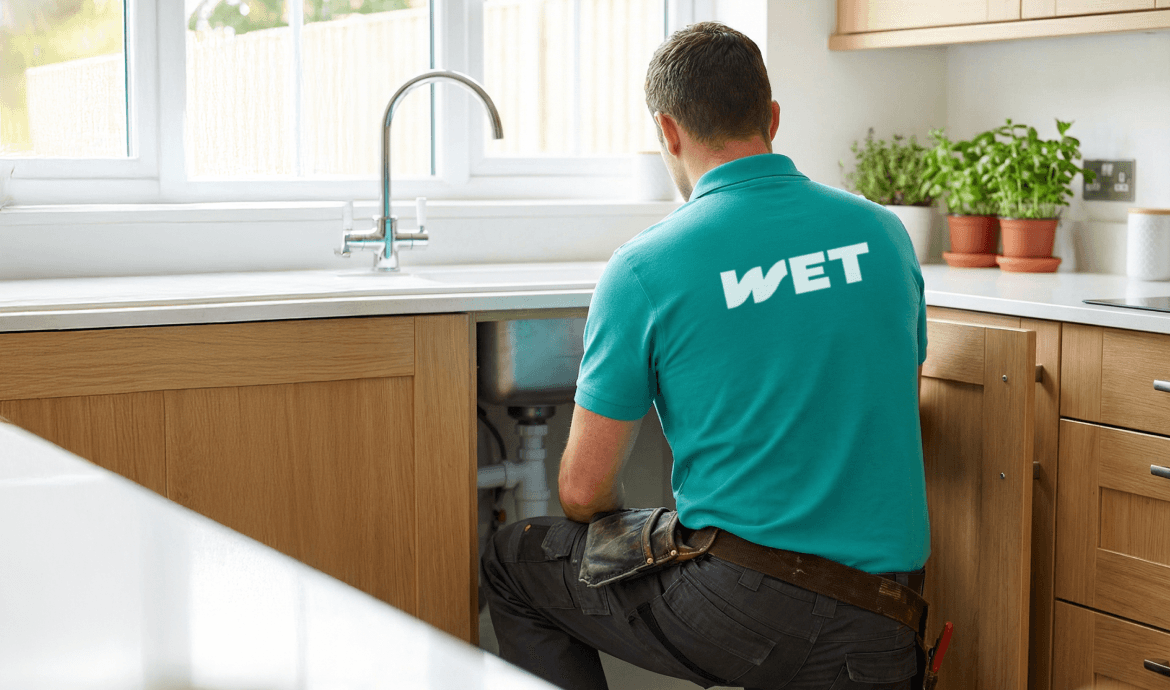
Notric is installed by certified professionals across the UK. Enter your postcode to find your nearest dealer and book a free consultation.