What Is Hard Water?
If you live in the UK, there’s a good chance your water is harder than you think — and it’s costing you money, comfort, and time every single day.
What Is Hard Water?
Hard water is water that contains high levels of dissolved minerals — primarily calcium and magnesium. It forms naturally as rainwater passes through chalk and limestone rock underground, picking up minerals along the way. By the time it reaches your taps, it’s carrying enough dissolved minerals to leave deposits on everything it touches. Hard water isn’t unsafe to drink. The calcium and magnesium it contains are harmless — and they even contribute to your daily mineral intake. The real problems are in your pipes, your boiler, your shower, and your wallet. When hard water is heated or left to evaporate, those dissolved minerals come out of solution and form a solid, white-grey deposit called limescale. Limescale coats the inside of your pipes, builds up on taps and showerheads, insulates your boiler’s heating element, and slowly degrades every water-using appliance in your home. It’s one of the most common — and most expensive — household problems in the UK.
Do I Have Hard Water?
Over 60% of UK homes are supplied with hard water, with the highest concentrations in London, the South East, East Anglia, the East Midlands, and parts of Yorkshire. Cities like Brighton, Cambridge, Canterbury, Bristol, Chelmsford, Guildford, and Oxford consistently rank among the hardest water areas in the country. You don’t need a test kit to spot the signs. If you notice any of the following, hard water is very likely the cause: White, chalky deposits around your taps and showerheads. Spots and streaks on glasses and dishes straight out of the dishwasher. Soap and shampoo that won’t lather properly. Dry, tight-feeling skin after a shower. Flat, dull hair that’s hard to manage. Limescale flakes floating in your kettle. Higher-than-expected energy bills. If even two or three of these sound familiar, your water is almost certainly hard — and it’s costing you more than you realise.
How Water Hardness Is Measured
Water hardness is measured in parts per million (ppm) of calcium carbonate. The higher the number, the harder the water. Here’s how the scale breaks down: Soft: 0–60 ppm. Moderately Soft: 61–120 ppm. Slightly Hard: 121–180 ppm. Moderately Hard: 181–240 ppm. Hard: 241–300 ppm. Very Hard: 300+ ppm. For context, many areas in the South East of England regularly exceed 300 ppm — and some parts of London measure above 400 ppm. At those levels, limescale builds up rapidly and the effects on your home are significant. You can check your water hardness in three ways: visit your water supplier’s website and search by postcode, use a TDS (Total Dissolved Solids) meter for a quick home reading, or request a free professional water test through the Notric website for the most accurate result.
What Is a Water Softener?
What Hard Water Does to Your Home
The damage is gradual, which is why most people don’t make the connection until something breaks. But hard water is working against your home every single day. Limescale accumulates inside your pipes, narrowing them over time and reducing water flow throughout your home. It coats the heating element inside your boiler, creating an insulating layer that forces the system to use more gas or electricity to heat the same amount of water. Just 1mm of limescale on a heating element increases energy consumption by up to 7%. Your washing machine, dishwasher, and kettle are all under the same pressure. Limescale builds up on heating elements, drums, and seals — reducing efficiency and accelerating wear. Appliances that should last 10–15 years can fail in 7–10 when fighting hard water. That’s up to 30% of their expected lifespan lost to limescale. On surfaces, hard water leaves white, crusty deposits on taps, showerheads, tiles, and glass. Soap reacts with the minerals to create scum that clings to sinks, baths, and shower doors. Glasses come out of the dishwasher spotted. Laundry feels stiff. And cleaning becomes a constant, losing battle. Then there’s the personal impact. Hard water strips natural oils from your skin, leaving it dry and tight after washing. It leaves a film of mineral residue on your hair, making it flat, dull, and hard to style. For people with sensitive skin or conditions like eczema, hard water can be a significant aggravating factor. The estimated annual cost to the average UK household? Over £500 — across higher energy bills, premature appliance replacement, additional cleaning products, and occasional plumbing repairs. Over 10 years, that adds up to £5,000 or more. And the vast majority of people don’t realise they’re paying it.
How to Fix Hard Water
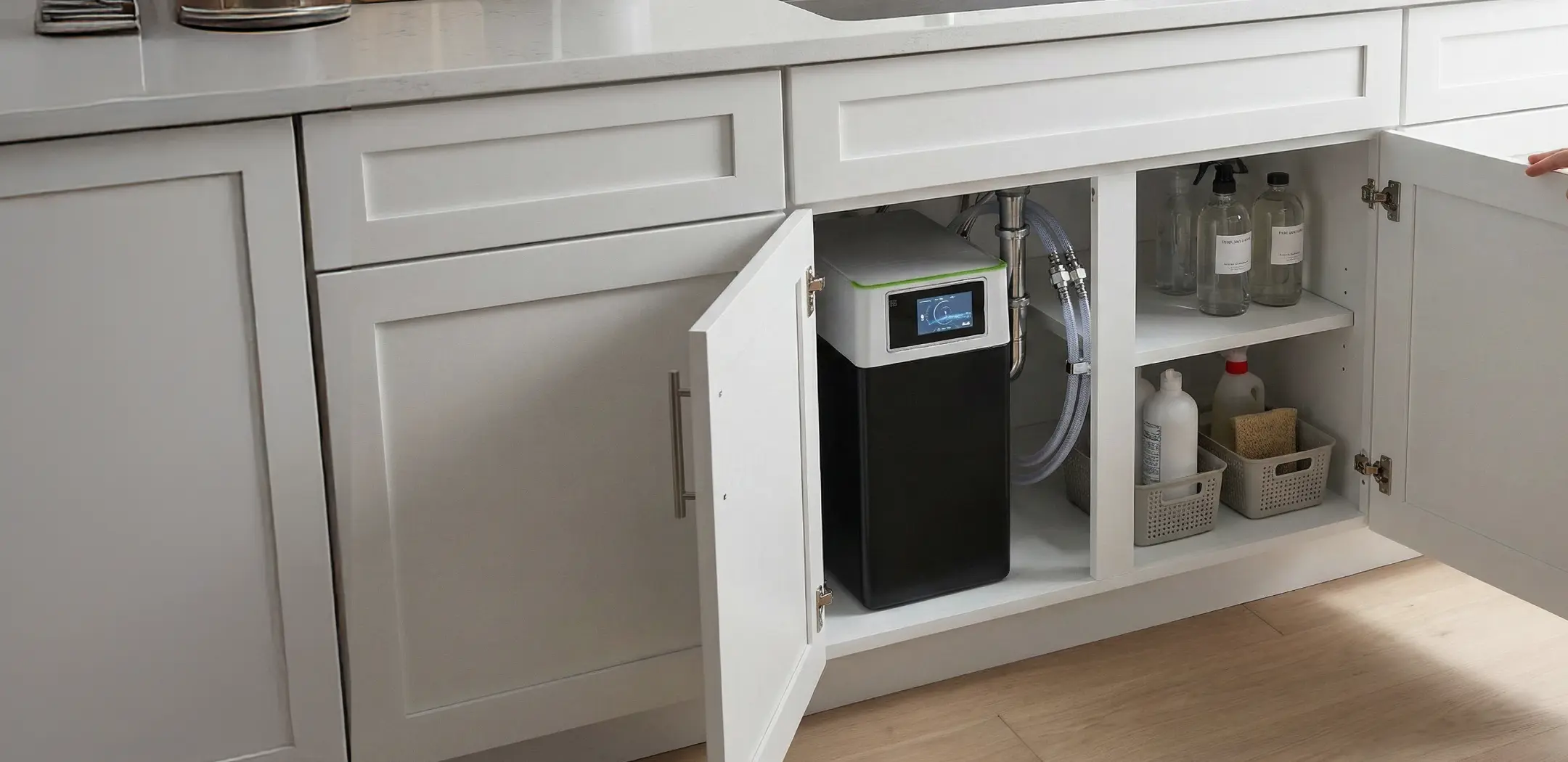
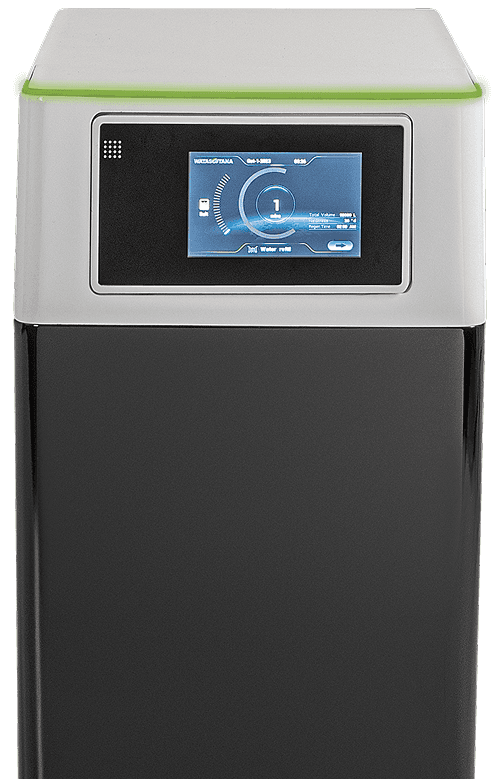
There is no way to change the hardness of the water your supplier delivers. It’s determined by the geology of your area — the chalk and limestone that the water passes through before it reaches the mains. You can’t filter it out with a standard jug filter. You can’t boil it away. And you can’t scrub your way out of the problem. The only permanent solution is to remove the calcium and magnesium from your water before it reaches your taps. That’s exactly what a water softener does. The Notric water softener uses a process called ion exchange to capture the calcium and magnesium ions in hard water and replace them with sodium ions. The result is genuinely soft water that cannot form limescale. It flows through every tap in your home — protecting your pipes, your boiler, your appliances, your skin, and your surfaces. Notric is engineered to be ultra-compact, fitting under your kitchen sink where most traditional softeners simply can’t. It features a full-colour touchscreen, laser salt detection with real-time alerts, a 48-hour backup battery for power cuts, and automatic regeneration that handles itself. It’s installed by a certified local dealer in around two hours, and it’s backed by a 12-year warranty. No more limescale. No more scrubbing. No more overpaying on energy bills. Just clean, soft water from every tap in your home.
Check Your Water Hardness
Enter your postcode below to see how hard your water is — and find a Notric dealer near you.
Frequently Asked Questions
Find a Notric Dealer Near You
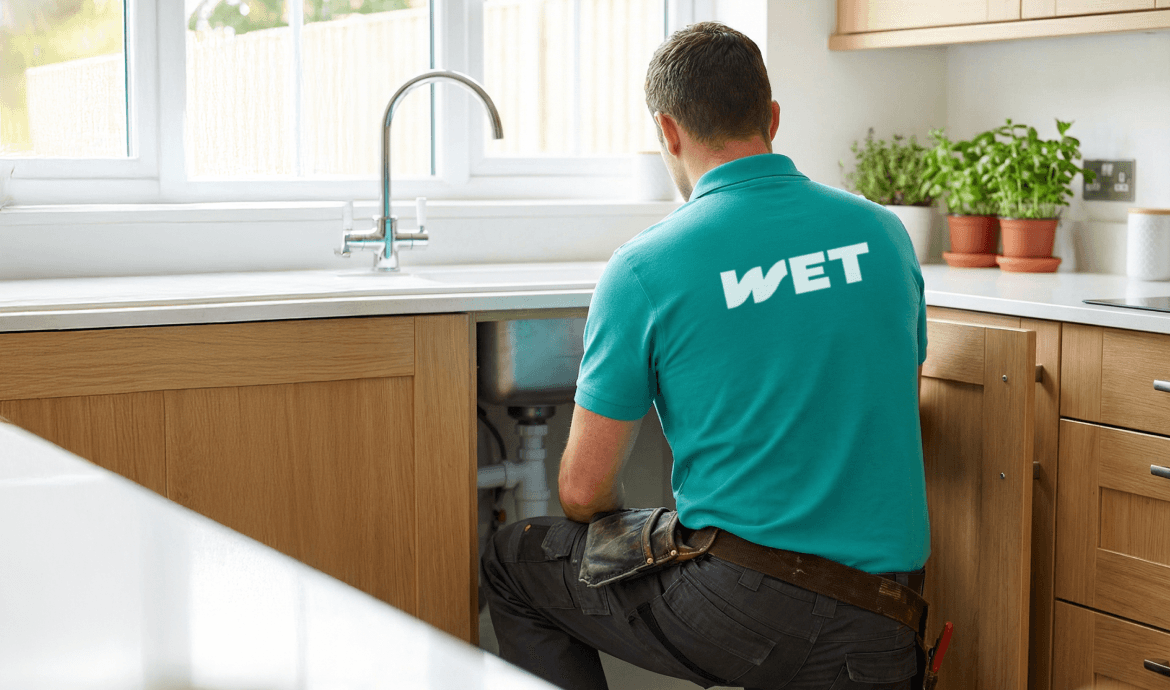
Notric is installed by certified professionals across the UK. Enter your postcode to find your nearest dealer and book a free consultation.